
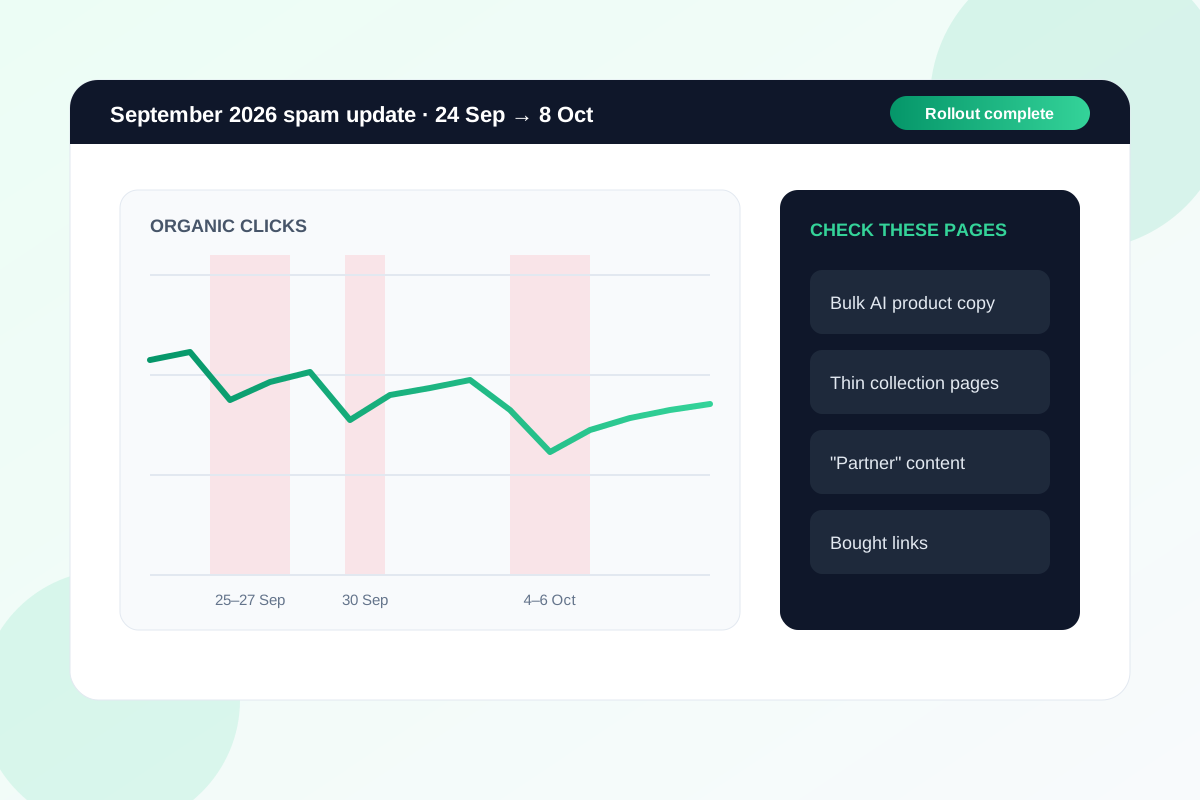
If your organic traffic wobbled between late September and early October, Google's September 2026 spam update is the obvious suspect. It's also probably not the reason.
The update ran for almost two weeks and finished on 8 October. Most stores that dipped in that window weren't hit by it. They just happened to move at the same time as everyone else.
Here's how I'd work out whether it touched your store, and what I would and wouldn't change six weeks out from Black Friday.
What actually happened
Google released the update on 24 September (US time) and said it applies globally and in every language. Its Search Status Dashboard marked the rollout complete on 8 October.
That's long for a spam update. Google had warned it could take up to two weeks, and it used most of that. Rank trackers saw the biggest swings around 25–27 September, 30 September and 4–6 October, so those are the dates to look at in your own data.
Google called it a normal spam update and didn't say which tactics it was aimed at.
How to tell if it touched your store
- In Search Console, open Performance and compare 25 September to 10 October against the two weeks before it.
- Switch to the Pages tab and sort by the change in clicks. A spam update tends to hit a type of page, not your whole site evenly.
- Check whether the losers have something in common. Thin collection pages, auto-generated product descriptions and old blog posts written for keywords are the usual suspects.
- Open Security & Manual Actions and confirm the Manual actions report is clear. Spam updates are automated, so a clean report doesn't rule them out, but you want to know if there's something else going on.
If the drop is spread evenly across every page, or it lines up with a seasonal dip you see every October, it's very unlikely to be the spam update.
What Google treats as spam on a store
Google's spam policies are long, but three parts show up on ecommerce sites more than the rest.
- Scaled content. Using AI or templates to churn out lots of pages that don't add anything. Hundreds of "best [product] in [suburb]" pages count. So does a product description tool run across the whole catalogue with nobody checking the output.
- Site reputation abuse. Third-party content published on your domain to borrow its rankings, like a "partners" section full of sponsored posts.
- Link spam. Bought links and link swaps.
If none of that sounds like your store, I wouldn't spend time on this update at all.
If you were hit, don't rebuild the site in November
Google's spam updates page is honest about recovery. Fixing the problem helps once its systems learn "over a period of months" that the site complies. For link spam, whatever ranking those links gave you is simply gone.
So there's no quick win before Black Friday. Pull or noindex the worst pages, write down what you changed and when, and leave the bigger clean-up until January.
What I'd avoid is a panicked rewrite of every product page in the busiest six weeks of the year. You'll break things that were working and still not see a recovery until 2027.
What to do this week
- Compare Search Console clicks for 25 September to 10 October against the fortnight before.
- Find the page types that dropped, not just the individual URLs.
- Check the Manual actions report, then note the result in your reporting.
- If AI wrote your product or collection copy in bulk, read twenty pages. Rewrite or noindex the ones you wouldn't show a customer.
- Lean on Google Ads and email for BFCM traffic if organic is down. Recovery from a spam update won't land in time.
If you want a second set of eyes on whether a drop is the update or something else, send me the store and I'll tell you what I see in the data.
Sources
- Google Search Status Dashboard, September 2026 spam update
- Google Search spam updates, Google Search Central
- Spam policies for Google web search, Google Search Central
- Search Engine Land on the rollout dates
- Search Engine Roundtable on the volatility waves
Not sure if a traffic drop is the update or something else?
Send the store URL. I'll reply within one business day (Christchurch time) with what the Search Console data actually shows.
Get a free store audit